


U.S. Stocks Close Higher Across the Board, Sending a Positive Signal: Sentiment Improves but Further Divergence Still Needs Watching
Keywords: U.S. market rebound, Dow Jones, Nasdaq, S&P 500, market sentiment, investor expectations, global capital markets
Introduction
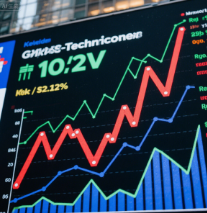
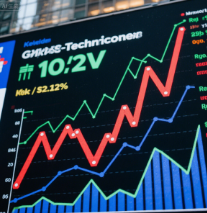
On the 25th local time, the U.S. stock market continued its recent recovery, with all three major indices closing higher. The Dow Jones Industrial Average rose 0.66%, the Nasdaq Composite gained 0.77%, and the S&P 500 advanced 0.54%. From the tape, the market has repaired some of the earlier damage, risk appetite has improved, and investor sentiment has clearly gotten better.
This rebound was not driven purely by short-term sentiment. Rather, it was the result of several forces acting together: investors became more confident in economic resilience, and the market’s view of the monetary policy path also became more rational. For global capital markets, a U.S. rebound does not just mean a recovery in U.S. asset prices; it can also set off ripple effects across capital flows and risk appetite in other markets.
1. All three major indices closed higher, signaling a pickup in risk appetite
When the Dow, Nasdaq, and S&P 500 all rise together, it suggests the market is not just repairing one asset class or one sector, but improving overall sentiment. The Dow is more representative of traditional industries and blue chips, the Nasdaq reflects tech and growth stocks, and the S&P 500 offers broad coverage. When all three rise, it usually means the market is forming a more unified positive expectation.
It is especially notable that the Nasdaq rose slightly more than the S&P 500 and the Dow, showing that tech still played an important role in the rebound. Tech stocks are often more sensitive to rate expectations and liquidity conditions, and when worries about the policy path ease, growth assets usually rebound first. That suggests one of the main drivers of the current repair still comes from repricing the future macro environment.
From a market-structure view, U.S. stocks have not been in a one-way move lately; they have been showing more of an “incremental improvement” pattern. Such gains may not be a strong breakout, but they often mean overly pessimistic expectations are being corrected. For investors, that matters more than the size of the daily move itself.
2. What is behind the rebound: expectation resets, earnings support, and liquidity trade-offs
The strength in U.S. equities is not an isolated event; it is the result of economic data, corporate earnings, and policy expectations working together. First, the market still sees some support for the resilience of the U.S. economy. Although growth pressure in some areas has not fully faded, the labor market, consumer activity, and corporate operating data still show considerable strength. That has eased fears of a hard landing.
Second, earnings expectations are also a key driver. For U.S. stocks, listed-company fundamentals always provide important support for valuations. Especially in technology, consumer, and some industrial sectors, if earnings beat expectations, investor confidence can improve quickly. The market has been paying close attention to results from leading companies, and the steady cash flow and strong profitability of large firms have also provided a foundation for the index rebound.
Third, monetary policy expectations remain a critical variable for U.S. stocks. The market often trades ahead of future rate moves, and when investors think tightening is near its end or policy will become more cautious, the pressure on high-valuation assets eases. Although policy uncertainty still exists in the short term, even a marginal improvement in expectations is enough to bring money back into the stock market.
Technical factors also matter. After the earlier correction, many investors began looking for more attractive entry points, and dip buying gradually stepped in, creating support for the market. That shows the current rebound is supported by both fundamentals and a repair in sentiment and positioning.
3. Impact on global markets: sentiment transmission matters more than trend confirmation
As a major global barometer, the direction of U.S. stocks often has a strong influence on other markets. This latest across-the-board close higher should help lift the mood in global risk assets in the short term, especially around the opening in Asia-Pacific and Europe, where it often gives related sectors a positive boost.
That said, a U.S. rebound does not mean a durable uptrend has already been fully established. Global markets still face multiple variables, including the inflation path, interest-rate levels, geopolitical risk, and the outlook for global growth. Any one of these can disrupt sentiment. So while the index gains send a positive signal, investors still need to keep a clear view of the risks.
Over a longer horizon, whether U.S. stocks can extend the rebound will depend on three things: whether macro data continue to support the soft-landing story; whether corporate earnings keep delivering; and whether policy becomes more favorable to risk assets. Only when those three factors reinforce each other is the market more likely to move from a short-term recovery to a more stable uptrend.
4. How investors should read the signal
For institutional and individual investors, this rebound is best understood as a “repair window,” not the start of a risk-free rally. In other words, sentiment is improving, but uncertainty remains high, and allocation still needs diversification and balance. In the near term, growth sectors may enjoy more flexibility thanks to easier liquidity expectations, while defensive sectors remain an important ballast against volatility.
In practice, investors should not become overly optimistic based on one day’s rise alone. Instead, they should watch whether the next data points continue to validate the market’s view. For example, whether inflation keeps cooling, whether the labor market stays stable, and whether earnings keep beating expectations are all important clues to whether the U.S. rally can continue. If these indicators stay supportive, the current rebound could gradually turn into a broader market repair.
Conclusion
Overall, the three major U.S. indices all closed higher on the 25th local time, reflecting an improvement in risk appetite and a reduction in the market’s pessimism about the economy and policy. The synchronized rise in the Dow, Nasdaq, and S&P 500 shows the rebound is broad-based, while the Nasdaq’s slightly stronger gain indicates that tech remains one of the key forces driving the move.
But at a deeper level, the market is still in an expectation-reset phase, and the next move will continue to depend on validation from macro data, corporate earnings, and the policy path. For global investors, this rally sends a positive signal, but it should also be seen as part of the market’s process of finding a new balance. If fundamentals and liquidity continue to improve, U.S. stocks may gain further support; if external uncertainty rises again, volatility could easily expand.
In a market full of variables, rational judgment and disciplined allocation remain the keys to capturing opportunities and controlling risk.