


Why Invest in US Stocks? Strategic Value and Investment Strategies in Global Asset Allocation for the Second Half of 2026
\nIn 2026, as the global economic landscape continues to evolve, Hong Kong and Taiwan investors face unprecedented asset allocation challenges. With the Federal Reserve's policy shift, escalating geopolitical risks, and slowing global economic growth, finding quality assets that can navigate cyclical fluctuations has become a focal point for investors. Against this backdrop, the US stock market continues to occupy a central position in global asset allocation, leveraging its deep liquidity, technological innovation capabilities, and corporate profit resilience. This article will conduct an in-depth analysis of the investment value of the US stock market from multiple dimensions and provide specific asset allocation strategies for Hong Kong and Taiwan investors for the second half of the year.
\n\nCore Advantages of the US Stock Market: A Value Fortress That Cycles Through Periods
\nThe reason the US stock market continues to attract global capital stems from its unique structural advantages. Firstly, the US stock market possesses the world's most comprehensive corporate governance system and information disclosure system, providing investors with a relatively transparent investment environment. Secondly, the US stock market brings together the world's most innovative enterprises, especially in cutting-edge fields such as artificial intelligence, biotechnology, and clean energy, where American companies occupy a technological high ground. Thirdly, the status of the dollar as a global reserve currency gives US stock assets certain hedging functions when facing global inflationary pressures.
\n\nFrom a valuation perspective, despite significant adjustments in the US stock market in the first half of 2026, the price-to-earnings ratios of major indices remain within historically reasonable ranges. Especially considering the resilience of US corporate profitability and the valuation repair space brought by the start of a global interest rate cut cycle, the US stock market still possesses long-term investment value. Data shows that in the second quarter of 2026, the overall profit growth of S&P 500 index components year-on-year was 3.2%, exceeding market expectations, indicating that the fundamentals of US companies remain solid.
\n\nKey Investment Themes for the Second Half of 2026: Technology Leadership and Defense Focus
\nLooking ahead to the second half of 2026, the US stock market will present several key investment themes. Firstly is the continuous expansion of the artificial intelligence industry. With the commercial implementation of large language models such as ChatGPT, demand for AI computing infrastructure, enterprise-level application solutions, and related semiconductor equipment will continue to grow. Technology giants such as NVIDIA, Microsoft, and Google have already shown initial results in their AI layouts, and their revenue growth is expected to accelerate further in the second half.
\n\nSecond is the relative value of defensive sectors. Against the backdrop of slowing economic growth, defensive sectors such as consumer staples, healthcare, and utilities often show strong resilience. Data shows that in the first half of 2026, the volatility of these sectors was significantly lower than that of technology stocks, providing a relatively safe haven for investors seeking stable returns. Especially with the intensifying trend of global aging, the long-term growth prospects in the healthcare sector remain bright.
\n\nThird are investment opportunities brought by energy transition. Driven by global carbon neutrality goals, renewable energy, energy storage technologies, and electric vehicle industry chains will continue to receive policy support and market demand. Leading clean energy companies such as Tesla and First Solar are expected to benefit from the energy transition, providing investors with long-term growth potential.
\n\n"Barbell" Allocation Strategy Between Technology and Defensive Sectors
\nFacing a complex market environment, Hong Kong and Taiwan investors can consider adopting a "barbell" allocation strategy, balancing between growth-oriented technology sectors and traditional defensive sectors. Specifically, 60% of assets can be allocated to technology stocks with long-term growth potential, and 40% to defensive sectors to cope with market uncertainties.
\n\nWithin the technology sector, it is recommended to focus on three types of companies: first, AI infrastructure providers such as chip manufacturers NVIDIA and AMD; second, cloud service providers such as Microsoft and Amazon, which will benefit from the popularization of enterprise AI applications; third, software companies with technical barriers such as Adobe and Salesforce, which have stable cash flows and high customer stickiness.
\n\nIn defensive sectors, it is recommended to focus on leading companies with pricing power and stable cash flows, such as consumer giants Coca-Cola, Johnson & Johnson, and Procter & Gamble, as well as pharmaceutical companies such as Merck and Pfizer. These companies can generally maintain relatively stable profitability during economic slowdowns, providing downside protection for the investment portfolio.
\n\nHow Hong Kong and Taiwan Investors Can Allocate to US Stocks Through ETFs
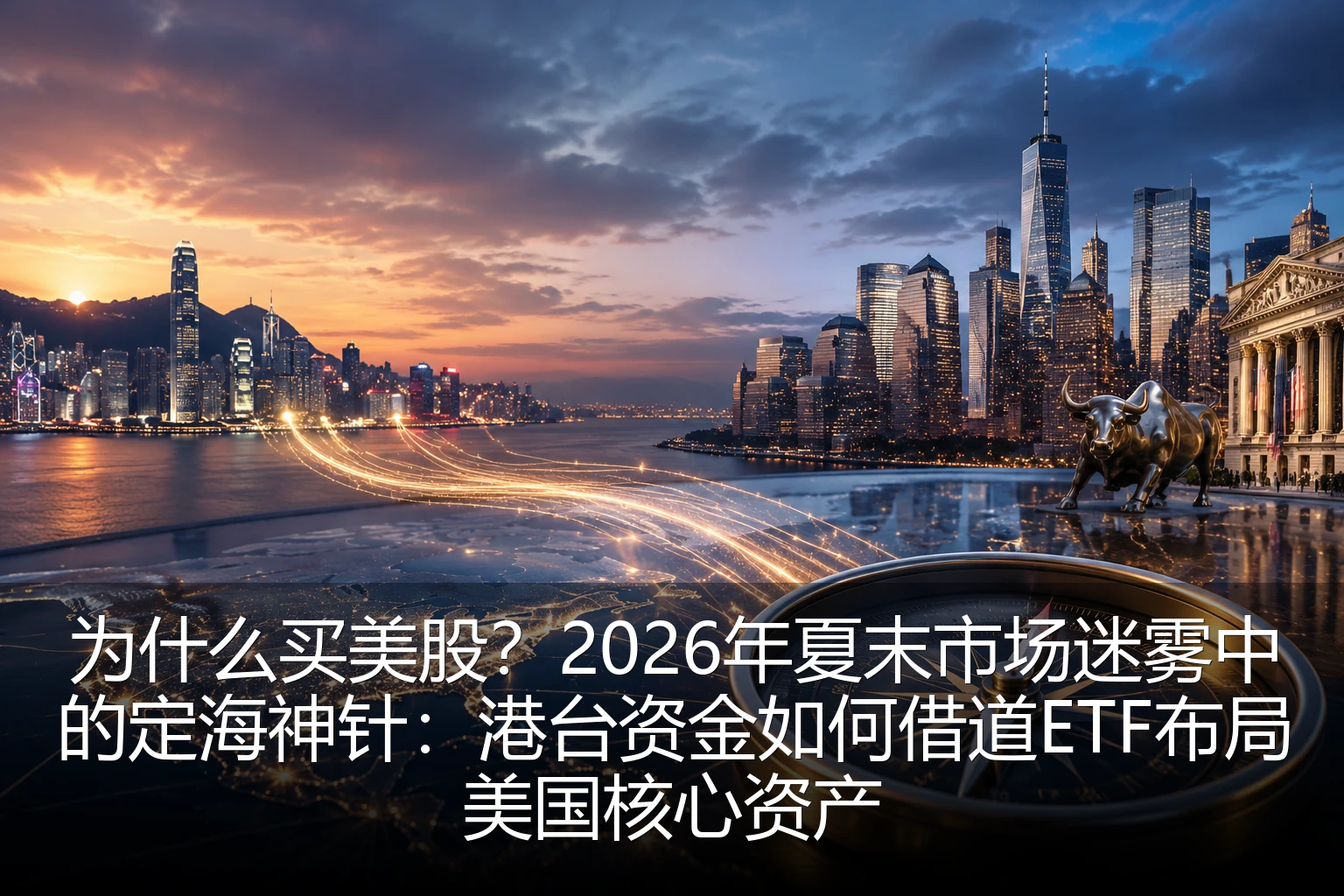
\nFor Hong Kong and Taiwan investors, allocating to US stocks through ETFs (Exchange Traded Funds) is an efficient and low-threshold approach. ETFs not only provide risk management functions for diversified investment but also allow investors to participate in specific industries or themes at a lower cost. The following are several types of ETF products worth attention:
\n\n- \n
- Technology ETFs: Such as Invesco QQQ Trust (QQQ) and Technology Select Sector SPDR Fund (XLK), the former tracks the Nasdaq 100 Index, the latter focuses on the technology sector, providing investors with opportunities to participate in the growth of the technology industry. \n
- Defensive ETFs: Such as Consumer Staples Select Sector SPDR Fund (XLP) and Health Care Select Sector SPDR Fund (XLV), focusing on consumer staples and healthcare sectors respectively, suitable for investors seeking stable returns. \n
- Global Diversified ETFs: Such as Vanguard S&P 500 ETF (VOO) and iShares Core S&P 500 ETF (IVV), both tracking the S&P 500 Index, providing investors with broad exposure to the US stock market. \n
- Thematic ETFs: Such as Global X Artificial Intelligence & Technology ETF (THNQ) and ARK Innovation ETF (ARKK), the former focuses on AI and technology themes, the latter invests in growth companies with disruptive innovation capabilities, suitable for investors with higher risk tolerance. \n
It is worth noting that when selecting ETFs, Hong Kong and Taiwan investors should pay attention to key indicators such as product liquidity, management fees, and tracking errors. At the same time, due to exchange rate fluctuations that may affect investment returns, it is recommended that investors appropriately hedge exchange rate risks or choose cross-border ETF products denominated in Hong Kong dollars or Taiwan dollars.
\n\nRisk Management and Long-term Investment Perspective
\nAlthough the US stock market has many advantages, investors still need to be vigilant about potential risks. Firstly, geopolitical tensions may increase market volatility, especially the continued development of US-China technological competition may affect the operating environment of related companies. Secondly, US corporate profit growth may face slowing pressure, especially if the global economic recovery falls short of expectations. Additionally, the persistent existence of inflationary pressures may force the Federal Reserve to maintain a tight monetary policy, suppressing highly valued technology stocks.
\n\nTo address these risks, Hong Kong and Taiwan investors should adopt the following risk management measures: first, maintain portfolio diversification to avoid excessive concentration in a single industry or theme; second, regularly review investment strategies and adjust asset allocation in a timely manner according to market changes; third, adopt a position-building approach in batches to avoid investing all funds at once at market highs; fourth, set reasonable stop-loss points to control the maximum loss of individual stocks.
\n\nFrom a long-term investment perspective, the historical performance of the US stock market shows that despite facing various challenges in the short term, long-term holding of quality US stocks often yields considerable returns. According to historical data, the S&P 500 Index has had an average annual return of about 10% over the past 50 years, significantly higher than most other asset classes. For Hong Kong and Taiwan investors, including US stocks as an important part of long-term asset allocation helps achieve wealth preservation and appreciation.
\n\nConclusion: The Strategic Position of US Stocks in Global Asset Allocation
\nIn the global economic environment of the second half of 2026, the US stock market continues to play an important role in global asset allocation. For Hong Kong and Taiwan investors, US stocks not only provide opportunities to participate in global innovative economic growth but also offer the value of diversification when regional markets fluctuate. By adopting a "barbell" allocation strategy, making rational use of ETF tools, and maintaining a long-term investment perspective, Hong Kong and Taiwan investors can grasp the strategic value of the US stock market in a complex and changing market environment.
\n\nIt is worth noting that investment decisions should be based on individual risk tolerance, investment objectives, and time horizon. It is recommended that Hong Kong and Taiwan investors fully understand the risk characteristics of related products before making investment decisions and consult with professional financial advisors. Against the backdrop of increasing global economic uncertainty, rational asset allocation will become key for investors to navigate cyclical fluctuations.
\n\nLooking ahead, with the deepening development of the technological revolution and the continuous evolution of the global economic landscape, the US stock market will continue to nurture new investment opportunities. Hong Kong and Taiwan investors should maintain an open investment perspective, treat US stocks as an important part of global asset allocation, effectively manage investment risks while seizing growth opportunities, and achieve the goal of long-term wealth appreciation.