

AI PCB Selloff Sparks Market Rumors, But Industry Fundamentals Remain Intact
Keywords: AI PCB, Shenghong Technology, Nvidia Rubin, printed circuit boards, supply chain rumors, high-density interconnect, advanced packaging, semiconductor equipment
Introduction
On June 23, the PCB segment within the computing power chain suffered a broad-based decline, with Shenghong Technology (300476), one of the sector’s leading names, falling more than 7% in a single session. The sharp correction quickly drew market attention, not only because of the stock’s recent strong performance, but also because it came amid a wave of rumors involving Nvidia, Rubin platform timing, and PCB pricing pressure.
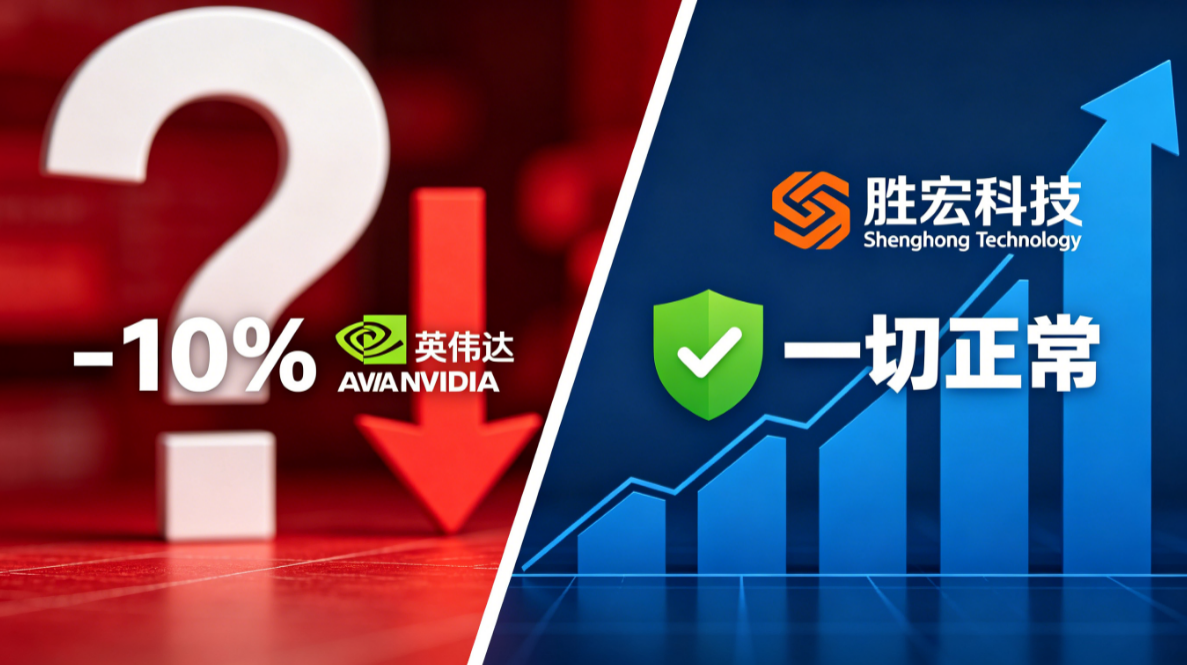
By June 24, Shenghong Technology responded to investor inquiries by stating that the company’s operations remained normal and that its fundamentals had not changed. The company also stressed that market rumors are numerous and should be judged against official disclosures. Against the backdrop of rising AI infrastructure demand and persistent supply constraints in advanced PCBs, the selloff appears to reflect sentiment-driven volatility rather than a clear shift in industry logic.
Rumors Trigger a Sector-wide Pullback
According to market reports, the first rumor suggested that Nvidia had asked PCB suppliers to cut prices by 10%. The second claimed that Shenghong Technology’s expansion plans were affecting Rubin platform shipments. These narratives helped trigger a broad decline in AI-related PCB names and fed concerns that the current growth cycle might be cooling earlier than expected.
However, industry observers quickly questioned the credibility of these claims. Shanghai Securities News cited multiple sources indicating that the rumors were exaggerated and misunderstood. In particular, the claim that Shenghong Technology delayed Rubin was said to lack a convincing industrial logic. This matters because, in a supply chain as complex as AI hardware, product schedules are usually determined by multiple technical factors rather than a single component vendor.
Shenghong Technology’s own response was notably measured. The company did not directly address each rumor point by point, but it emphasized that customer solution choices are not fixed forever and may be adjusted during production based on technical needs. It also noted that it has certain first-mover advantages in the sector. In other words, the company is signaling that short-term noise should not be confused with a change in long-term competitive position.
AI PCB Remains in a Tight Supply Phase
One of the most important points often overlooked in the market discussion is the current supply-demand structure of AI PCBs. A PCB used in consumer electronics may only require 4 to 6 layers, while high-end boards for AI servers can exceed 20 layers, with micron-level precision requirements. The manufacturing difficulty is comparable in some respects to semiconductor production.
This is why AI PCB remains in a structurally tight supply phase. When a product category is constrained by capacity and technical barriers, pricing power does not usually sit with the customer alone. In the current environment, delivery capability, yield, and process reliability are often more urgent priorities than negotiating lower prices. This is particularly true for AI server and networking infrastructure, where delays in board supply can slow down system integration and deployment.
From a broader perspective, the market may be underestimating how difficult it is to ramp advanced PCB production. Expansion is not simply a matter of adding capacity. High-layer-count HDI and multilayer boards require process stability, equipment coordination, materials compatibility, and rigorous quality control. These constraints explain why leading manufacturers can maintain relatively strong bargaining power even when rumors of price pressure emerge.
Rubin Timing Concerns Are More Likely Multi-Factor Than Single-Source
TrendForce analyst Gong Mingde noted that any delay to Nvidia’s Rubin platform is more likely tied to several technical and system-level issues, including HBM4 certification time, network transmission upgrades, power consumption optimization, and thermal design tuning. This explanation is much more consistent with the realities of AI system development.
Large-scale AI platforms are complex ecosystems. If a new generation of GPU architecture or server platform shifts, all surrounding components—from memory and interconnect to cooling and power delivery—must be aligned. A delay in one component does not usually mean one supplier is at fault; more often, it reflects the natural pace of validation across the whole stack.
This is why the market’s attempt to link Rubin’s timing to a single PCB supplier appears too simplistic. In high-end AI hardware, the pace of commercialization is shaped by system integration, certification cycles, and product readiness across multiple vendors. Reducing such a process to a single rumor can create short-term volatility, but it does not alter the underlying industry trajectory.
Jeffries Report Adds a Cautious Note, Not a Structural Reversal
Another factor behind the discussion was a research note from Jefferies. The report suggested that Kyber backplane PCB adoption, originally expected in 2027, may be delayed until 2028. Based on its estimates, if the adoption schedule shifts, the global AI PCB and CCL market sizes in 2027 could be around 5% and 8% below previous forecasts, respectively.
Still, the report also made an important distinction: a delay does not equal a reversal. Jefferies pointed out that the long-term growth logic for the PCB industry remains intact. Products such as switch boards and mid-boards are still moving toward higher-specification materials and more demanding performance standards. In other words, the technology roadmap may be stretched in timing, but not broken in direction.
This nuance is essential. In AI infrastructure, adoption cycles can shift quarter by quarter, but the broader trend toward higher bandwidth, denser interconnects, and more advanced substrates is still advancing. PCB is not a peripheral beneficiary of AI; it is one of the core physical layers enabling the compute network. That strategic role continues to support the long-term investment case for leading suppliers.
Shenghong Technology’s Position in the Global Market
Shenghong Technology’s growth profile helps explain why the stock remains closely watched. According to its Hong Kong listing prospectus, the company was one of the major suppliers of advanced AI and high-performance computing PCB products based on sales revenue in 2024 and the first half of 2025. It focuses on high-end HDI and multilayer PCB research, production, and sales.
Frost & Sullivan data show that, in terms of AI and high-performance computing PCB revenue in the first half of 2025, Shenghong Technology ranked first globally with a market share of 13.8%. Its core applications include AI accelerator cards, servers, AI servers, data center switches, and general substrates. The company also has manufacturing capability for more than 100-layer PCBs and is among the first globally to mass-produce 6-stage 24-layer HDI products, as well as 10-stage 30-layer HDI and 16-layer any-layer HDI technologies.
These capabilities are not trivial. They indicate that Shenghong is positioned not merely as a high-volume manufacturer, but as a technology-intensive supplier with a meaningful moat in advanced process development. In a market where AI hardware demands continue to rise, such capabilities are likely to remain highly relevant.
Strong Financial Performance Reflects Real Demand
The company’s recent financial results also suggest that the market should be careful not to overreact to short-term noise. Shenghong Technology reported revenue of 7.931 billion yuan in 2023, 10.731 billion yuan in 2024, and 19.292 billion yuan in 2025. Net profit rose from 671 million yuan to 1.154 billion yuan and then to 4.312 billion yuan over the same period.
In the first quarter of this year, revenue reached 5.519 billion yuan, up 27.99% year on year, while net profit rose 39.95% to 1.288 billion yuan. These figures show that demand remains robust and profitability continues to expand at a healthy pace. For a company operating in a technically demanding and capacity-constrained segment, this is a strong indication that end-market demand is still translating into real business results.
At the market level, the broader semiconductor supply chain was relatively resilient by midday, with advanced packaging, memory, and PCB names leading gains. Shenghong Technology itself narrowed its decline to 0.78%, closing at 335.55 yuan at midday. The rebound suggests that investors may be reassessing the initial panic.
Conclusion
The recent pullback in AI PCB stocks appears to have been driven more by rumors and emotional trading than by a meaningful deterioration in industry fundamentals. While headlines about price cuts and platform delays can easily unsettle the market, the underlying reality remains that advanced PCB production is still capacity-tight, technologically demanding, and strategically important to the AI infrastructure buildout.
Shenghong Technology’s response, its strong market position, and its solid financial performance all point to a company whose long-term trajectory is still supported by industry growth. For investors, the key is to distinguish between short-term sentiment shocks and structural changes. At present, the evidence suggests the former, not the latter.